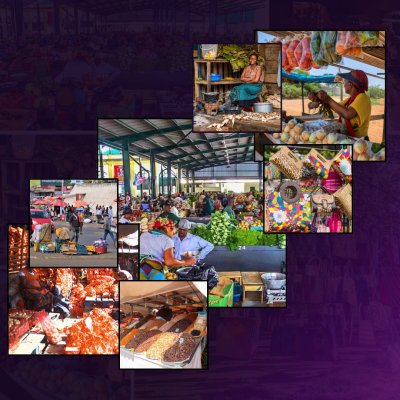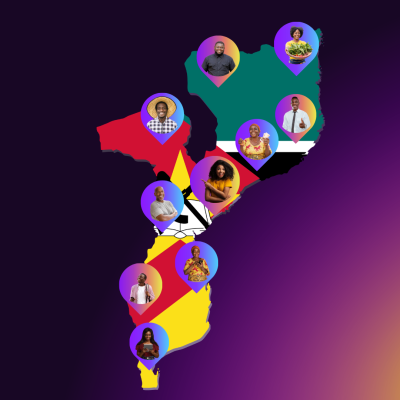

Understanding generations means understanding the rhythm of history and the different ways in which societies transform. Each group bears the marks of its time and translates these marks into values, consumption habits, and attitudes toward work. Looking at the global, African, and Mozambican picture, we realize that each generation is not just an age group, but a living narrative that influences markets, institutions, and cultures.
Baby Boomers (1946–1964)
- They grew up in a period of economic prosperity after World War II and believed that hard work would be the key to progress.
- They developed an identity marked by work ethic, perseverance, and respect for rules, deeply valuing social involvement.
- In terms of consumption, they favor products linked to health, well-being, and longevity, maintaining a clear preference for physical stores where trust and tangibility offer them security.
- At work, they take pride in their careers and associate self-esteem with professional results, being recognized for their dedication and responsibility.
- In Africa, they age with resilience despite limited access to healthcare and essential resources, requiring policies that guarantee their dignity.
- In Mozambique, they rely on personal recommendations and engage in small businesses or informal work, maintaining closeness as a core value.
Generation X (1965–1980)
- They grew up in a time of technological and social transition, developing autonomy and the ability to adapt to rapid change.
- They value authenticity, freedom, and balance between personal and professional life, rejecting overly rigid or extreme models.
- In terms of consumption, they seek efficiency and practical innovation, preferring functional brands that offer clear solutions without excessive formalities.
- At work, they favor independence, informality, and technological creativity, adopting flexible, results-oriented styles.
- In Africa, they have become resilient in the face of instability, but they continue to value education and secure jobs.
- In Mozambique, they have stable purchasing power, prefer physical stores, but already use their cell phones to research prices, demonstrating caution with digital technology.
Millennials – Generation Y (1981–1996)
- They grew up at the turn of the millennium, experiencing the transition from the pre-digital to the fully digital world, and have become progressive and empathetic.
- They value diversity, inclusion, sustainability, and social responsibility, integrating these principles into their consumption and work choices.
- They seek authentic and personalized experiences and are heavy users of technology, digital communication, and continuous learning.
- At work, they demand environments that respect their identity and values, placing great importance on the balance between personal and professional life.
- In Africa, they find fertile ground for digitization on a diverse continent, with high mobile phone penetration transforming the market.
- In Mozambique, they balance physical and digital purchases and use social media and WhatsApp as research and decision-making tools.
Generation Z (1997–2012)
- They are the first fully digital generation, having grown up with the internet, smartphones, and social media as a natural part of life.
- They experienced economic, climate, and health crises, which shaped a worldview marked by the search for truth, purpose, and identity.
- In terms of consumption, they are influenced by social networks and online communities, preferring brands that are transparent and aligned with their values.
- At work, they have low tolerance for environments that do not meet their expectations of transparency and seek stability and growth.
- In Africa, they represent the largest young population in the world, becoming an unavoidable economic and cultural force.
- In Mozambique, many are students with limited purchasing power, but deeply influenced by friends, social media, and Google.
Generation Alpha (2013–present)
- They grow up completely immersed in technology, artificial intelligence, and digital experiences, integrating these tools from birth.
- They are creative, curious, and conscious of diversity and social justice, influenced by Millennial parenting.
- When it comes to consumption, they prefer digital, interactive, and personalized content, shaped by YouTube, TikTok, and mobile apps, but they depend on their parents' choices.
- In future work, they are expected to seek out highly technological and collaborative environments, with a focus on purpose, innovation, and social impact.
- In Africa, technology will be essential to engage and retain this generation, which will grow up in an integrated digital ecosystem.
- In Mozambique, consumption reflects family budgets and parental decisions, with a strong influence from digital platforms.
Overall, each generation brings with it its own narrative, but they all coexist and interact in the same social and economic space.
Boomers offer experience and perseverance, Gen X balances tradition and innovation, Millennials demand purpose and social impact, Gen Z redefines consumption and work through digital hyperconnection, and Gen Alpha will grow up in a technological and collaborative ecosystem.
For leaders and decision-makers, the challenge is to build bridges between these generations, respecting local values and integrating global trends.
In Africa and Mozambique, where emerging digital realities and traditional habits coexist, this challenge is even greater, but also richer in opportunities.
Understanding generations means understanding the very rhythm of history, realizing that progress is not linear, but rather a constant dialogue between tradition and innovation, between experience and youth, between local and global.
It is through this dialogue that the relevance of any institution, company, or leadership is built, ensuring impact and sustainability in the future.
Look beyond. Act intelligently.
Sources:
- Intelsight, Lda. Market research: Profile and behavior of Mozambican consumers. Maputo: Intelsight, Lda.
- World Health Organization (WHO). Decade of Healthy Aging 2021–2030. Geneva: WHO.
- United Nations Economic Commission for Africa (UNECA) – African Center for Statistics. Demographics of Africa. Addis Ababa: UNECA.
- 7 Essential Generation Alpha Characteristics for 2025. PollPe Research Report.
- African Marketing Confederation (AMC). Meet Generation Alpha … in Africa. AMC Publications.